
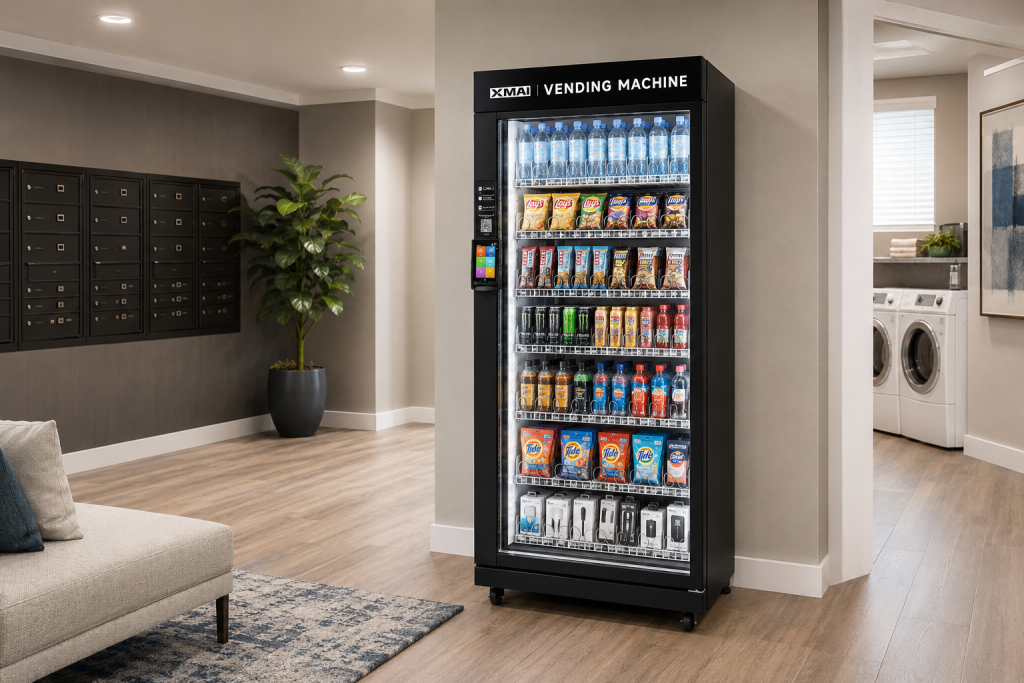
Apartment common areas are one of the most overlooked opportunities in the vending machine business. While many operators focus on offices, gyms, hotels, schools, and gas stations, apartment communities offer a unique combination of stable foot traffic, repeat users, and everyday convenience needs.
Residents do not only live in their apartments. They use shared spaces every day: lobbies, laundry rooms, fitness centers, mail rooms, pool areas, clubhouses, parking areas, and package rooms. In these moments, residents often need quick access to drinks, snacks, laundry products, personal care items, or small daily essentials.
That is why apartment common areas can become a profitable and underdeveloped vending machine market.
A well-placed smart vending machine can turn unused common space into a convenient retail point. For residents, it provides faster access to products without leaving the property. For property managers, it improves apartment amenities and resident satisfaction. For vending operators, it creates a stable, repeat-use business model with strong passive-income potential.
When the location, product mix, and property partnership are managed correctly, apartment vending can create a win-win-win situation for residents, operators, and property owners.
1.Why Apartment Common Areas Are a Vending Opportunity
Apartment buildings naturally create repeat traffic. Residents pass through the same areas every day, often at predictable times and with recurring needs.
Unlike random retail locations, apartments have a built-in customer base. Residents live nearby, return often, and are likely to use convenient services that save them time.
Common apartment vending opportunities include:
Lobby areas
Laundry rooms
Fitness centers
Mail rooms
Package rooms
Pool areas
Clubhouses
Parking garages
Community lounges
These spaces are often underused from a retail perspective. A vending machine can transform them into revenue-generating convenience points.
For example, a resident doing laundry may need detergent. Someone leaving the gym may want bottled water or an energy drink. A resident picking up a package may also grab a snack. A tenant returning late at night may want a drink without driving to a convenience store.
This is the core value of apartment vending: it serves people at the exact moment they need convenience.
2.High Foot Traffic Is the Foundation of Profitability
Traffic is one of the most important factors in vending profitability. Apartment common areas can perform well because traffic is consistent and repeatable.
Unlike one-time visitors in some retail spaces, apartment residents are regular users. They may pass the machine multiple times per week, sometimes multiple times per day.
Strong apartment vending locations include:
Lobby
The lobby is one of the most visible areas in an apartment building. It works well for snacks, drinks, and daily convenience products.
Laundry Room
Laundry rooms are excellent vending locations because residents often need detergent, dryer sheets, fabric softener, snacks, or drinks while waiting.
Fitness Center
Apartment gyms create demand for bottled water, sports drinks, protein bars, energy drinks, and healthy snacks.
Mail or Package Room
Residents frequently visit mail and package areas, making them strong locations for quick impulse purchases.
Pool and Clubhouse Areas
These spaces are ideal for cold drinks, snacks, sunscreen, towels, and seasonal products.
In many vending models, a good location may serve 18 or more customers per day. Apartment communities with strong resident traffic, limited nearby convenience stores, and high shared-space usage can exceed that average.
The key is not just traffic volume. It is traffic plus need. A vending machine should be placed where residents already have a reason to stop.
3.Location Strategy: Placement Can Make or Break the Business
The success of apartment vending depends heavily on location selection. A smart vending machine hidden in a low-traffic corner may underperform, even if the product mix is good.
The best placement follows three principles:
Convenience
Visibility
Demand match
The machine should be easy to see, easy to access, and placed near a behavior that creates immediate demand.
For example:
Gym vending should include water, energy drinks, and protein snacks.
Laundry room vending should include detergent, softener, and light snacks.
Lobby vending should include grab-and-go snacks, bottled drinks, and daily essentials.
Pool area vending should include cold beverages, sunscreen, and seasonal items.
Mail room vending should include quick snacks, drinks, and small convenience products.
Property negotiation is also important. Operators should present the vending machine as an amenity, not just a machine. The pitch should show how vending improves resident convenience, adds property value, and can generate revenue through a revenue-sharing model.
Common partnership models include:
Fixed monthly rent
Revenue share with the property
Free placement with operator-managed restocking
Custom agreement based on traffic and product type
A revenue-sharing model can make the offer more attractive to property managers because it gives them a financial upside without requiring extra staffing.
4.Product Selection Must Match Residential Life
The most profitable apartment vending machines are stocked for how residents actually live.
A standard snack-and-drink setup can work, but apartment locations often perform better when operators add household and daily convenience items.
Basic Products
These are reliable, high-demand items:
Bottled water
Soda
Sparkling water
Energy drinks
Chips
Candy
Cookies
Protein bars
Granola bars
Coffee drinks
High-Profit Daily Essentials
These products can increase average transaction value:
Laundry detergent pods
Fabric softener
Dryer sheets
Phone chargers
Charging cables
Toothpaste
Deodorant
Travel-size shampoo
Personal care items
Batteries
Trend and Wellness Products
Modern apartment residents often respond well to healthier and lifestyle-focused products:
Low-sugar drinks
Gluten-free snacks
Protein snacks
Trail mix
Sparkling water
Electrolyte drinks
Organic snack options
Plant-based items
The goal is to make the vending machine feel like a small community convenience hub.
When residents see products that solve real problems, the machine becomes more than a snack dispenser. It becomes a useful amenity.
Smart vending machines can help operators track what sells and what does not. If laundry products sell well, increase shelf space. If a snack is slow, replace it. If gym users buy more sports drinks, stock more hydration products.
This data-driven approach improves sales and reduces waste.
5.Apartment Vending Adds Value Beyond Revenue
A vending machine in an apartment community is not only a profit tool. It can also improve the property’s amenity package.
Property managers are constantly looking for ways to improve resident satisfaction and make their buildings more attractive to renters. A smart vending machine can help by offering:
24/7 access to useful products
Better convenience for residents
Modern self-service retail
Support for fitness and laundry areas
Improved common-area functionality
A stronger community experience
For renters, convenience matters. If a resident can buy detergent at 10 p.m. without leaving the building, that small experience can influence how they feel about the property.
For apartment owners, vending can support leasing and retention. It shows that the property is thinking about daily resident needs.
This creates three layers of value:
Revenue potential for the vending operator
Amenity upgrade for the property
Convenience improvement for residents
That is why apartment vending can be more attractive than many operators realize.
6.Why Smart Vending Machines Are Better for Apartment Common Areas
Traditional vending machines can still work, but smart vending machines are better suited for modern residential communities.
XMAI smart vending machines support features that help both operators and residents, including:
Cashless payment
Touchscreen operation
Remote inventory monitoring
Sales data tracking
Flexible product layouts
LED product display
Custom branding options
Multiple machine sizes
Factory-direct supply
Global shipping support
Cashless payment is especially important in apartment communities. Many residents prefer to pay with cards, mobile wallets, or digital payment methods. If a vending machine only accepts cash, it may lose sales.
Remote monitoring also matters. Operators can check inventory, product movement, and machine status without visiting the property every day. This reduces unnecessary trips and helps keep popular items in stock.
XMAI machines such as Pro 520, Max 680, and Ultra 1100 can support different apartment environments, from compact laundry rooms to larger high-traffic lobbies and clubhouses.
7.Profit Potential and Realistic Expectations
Apartment vending can be profitable, but results depend on several factors:
Number of residents
Location visibility
Product selection
Pricing
Restocking efficiency
Property agreement
Machine reliability
Local competition
A strong apartment location may generate steady monthly profit because residents create repeat demand. In some quality locations, a single machine may aim for monthly net profit of $350 or more after product costs and operating expenses, but actual results vary by property and execution.
Operators should evaluate each site carefully before deployment.
Important questions include:
How many residents live in the community?
Are there nearby convenience stores?
How often do residents use the common areas?
Is the machine location visible and accessible?
Does the property manager support the project?
What products do residents need most?
The best approach is to treat each machine like a small retail store. Monitor data, improve inventory, maintain cleanliness, and build a good relationship with the property team.
9.Common Challenges and Solutions
Challenge: Poor Placement
Solution: Place machines in high-traffic areas such as lobbies, gyms, laundry rooms, and mail rooms.
Challenge: Wrong Product Mix
Solution: Match products to resident behavior and use sales data to adjust inventory.
Challenge: Property Approval
Solution: Present vending as an amenity upgrade and offer a revenue-sharing plan.
Challenge: Restocking Issues
Solution: Use remote inventory monitoring to schedule restocking efficiently.
Challenge: Machine Downtime
Solution: Choose reliable commercial machines and work with a supplier that offers support and parts.
9.Conclusion: Redefining Apartment Common Areas
Apartment common areas are no longer just shared spaces. With the right vending strategy, they can become low-cost, stable, and repeatable revenue points.
The success formula is clear:
Choose the right location
Stock the right products
Build a strong property partnership
For residents, apartment vending provides convenience. For property managers, it improves amenities. For vending operators, it creates a scalable business opportunity.
As more communities look for better resident experiences, smart vending machines can become an important part of modern apartment living.
To explore smart vending machine solutions for apartment common areas, visit xmaivending.com or contact XMAI to request product details and pricing.
FAQ
Are apartment common areas good vending machine locations?
Yes. Apartment communities often have repeat traffic, fixed residents, and strong convenience needs, especially in lobbies, laundry rooms, gyms, and mail rooms.
How much can one apartment vending machine make?
Results vary by location, products, and traffic. In strong locations, operators may aim for monthly net profit of $350 or more, but profit is not guaranteed.
What products work best in apartment vending machines?
Drinks, snacks, laundry products, phone chargers, personal care items, and healthy convenience products often work well.
How do operators increase revenue?
Choose better locations, adjust products based on sales data, support cashless payment, and partner closely with property managers.
What are the main challenges?
Common challenges include poor placement, low visibility, wrong product mix, restocking issues, and machine downtime.
Related Articles
How to Start a Vending Machine Business
Vending Machines Elevate the Hotel Guest Experience
Why Offer Vending Machines in the Office
Gym Vending Machine Operations Guide
Profitability Analysis for Vending Machine Deployment at Gas Stations