
How to Start a Vending Machine Business
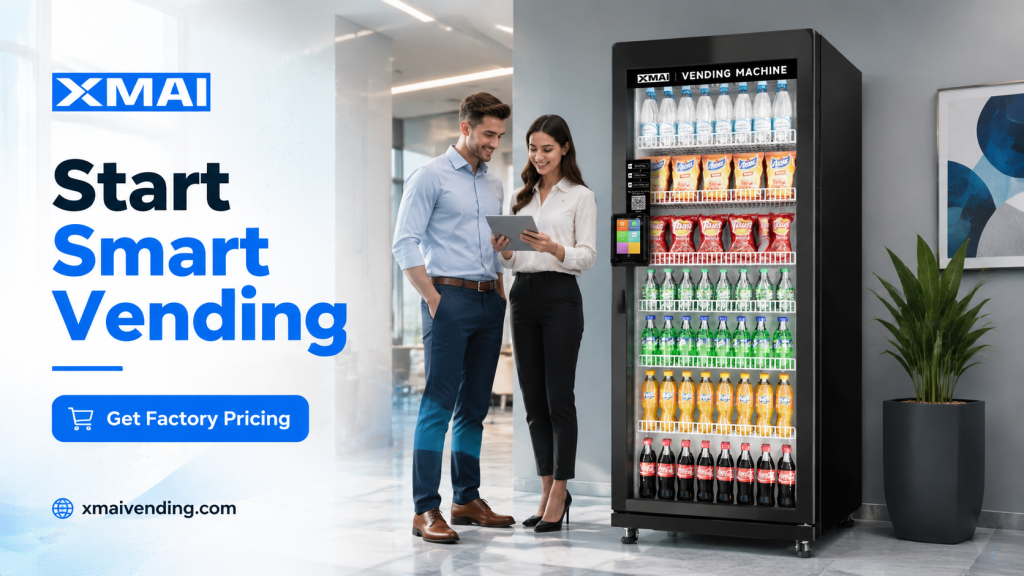
Starting a vending machine business can be one of the most practical ways to enter the world of unattended retail. Drinks, snacks, and everyday grab-and-go products are high-frequency items that people buy at offices, schools, gyms, apartments, hotels, transportation hubs, and commercial locations every day.
Compared with a traditional store, a vending machine business usually requires less labor, less space, and more flexible operating hours. A smart vending machine can sell products 24/7, accept cashless payments, track inventory remotely, and help operators manage multiple locations with lower daily involvement.
However, vending is not a “set it and forget it” business from day one. Success depends on choosing the right machine, placing it in the right location, understanding your costs, and managing inventory properly. This guide explains the key steps to help you start and grow a vending machine business with confidence.
Key Takeaways
Before getting into the details, here are the most important points:
Choose a smart vending machine with cashless payment, remote management, and reliable hardware.
Location is one of the biggest factors in vending profitability.
Plan your full cost, including machine purchase, installation, restocking, maintenance, electricity, and permits.
Start with products that have steady demand, such as drinks, snacks, and daily convenience items.
Use data to adjust inventory, pricing, and product selection over time.
Work with a reliable vending machine supplier that can support your business long term.
What Is a Vending Machine Business?
A vending machine business is a retail model where products are sold through automated machines without requiring a full-time cashier or store employee. Customers walk up to the machine, choose a product, pay, and receive the item.
Modern smart vending machines make the process even easier. Depending on the machine type, a customer may scan a QR code, tap a card, use a mobile wallet, or interact with a touchscreen. The machine records the sale, updates inventory data, and allows the operator to monitor performance remotely.
For many operators, this creates a flexible business model. You can start with one machine and expand to multiple locations as you learn what works.
How Smart Vending Machines Work
A smart vending machine is designed to simplify both the customer experience and the operator’s daily management.
A typical process looks like this:
The operator loads drinks, snacks, or retail products into the machine.
The customer chooses items through a screen or by opening the smart cabinet.
The customer pays by card, QR code, or mobile wallet.
The machine completes the transaction automatically.
Sales and inventory data are updated for the operator.
For business owners, the biggest advantage is visibility. Instead of guessing what is selling, smart vending systems can help you track sales, inventory levels, and machine status.
XMAI offers smart vending machine models designed for different business needs, including:
Pro 520: Compact and energy-efficient, ideal for smaller spaces.
Max 680: A balanced model for mainstream commercial locations.
Ultra 1100: Large-capacity vending for high-traffic environments.
Choosing the Right Vending Machine
Your vending machine is the core of your business. Choosing the wrong machine can lead to stockouts, high maintenance costs, poor customer experience, or limited product selection.
Here are the main factors to consider.
1.Capacity and Product Type
Think about what you want to sell and how often you can restock. Drinks and snacks are popular because they are easy to understand, easy to restock, and have steady demand.
If your location has limited traffic, a compact machine may be enough. If your location is busy, such as a gym, school, office building, or transit area, a larger-capacity machine can help reduce the risk of selling out during peak hours.
2.Payment Options
U.S. customers increasingly expect cashless payment. A vending machine that supports credit cards, debit cards, mobile wallets, and QR payments can reduce friction and increase convenience.
Cashless payment also helps operators track sales more easily and reduces the need to handle cash.
3.Remote Management
Remote management is one of the biggest advantages of smart vending. With remote monitoring, you can check:
Sales performance
Inventory levels
Machine status
Product movement
Refill needs
Basic fault alerts
This is especially useful if you plan to operate multiple machines across different locations.
4.Durability and Energy Efficiency
A vending machine should be durable, stable, and efficient. Look for strong construction, reliable cooling or storage systems, easy maintenance access, and efficient power usage.
Energy efficiency matters because electricity is a long-term operating cost. A machine that saves power can help improve overall profitability over time.
Understanding Vending Machine Costs
Before starting, it is important to understand the full cost of the business. The machine purchase is only one part of the investment.
Startup Costs
Common startup costs may include:
Vending machine purchase or lease
Shipping and delivery
Installation
Initial product inventory
Payment system setup
Branding or customization
Business registration or permits
Smart vending machines may cost more than basic traditional machines, but they can offer stronger features, better user experience, and easier management.
Ongoing Costs
Ongoing expenses may include:
Product restocking
Electricity
Maintenance
Repairs
Location commission or rent
Payment processing fees
Insurance
Local permits or licensing
The exact cost depends on your location, product type, machine model, and operating plan.
Can a Vending Machine Business Be Profitable?
A vending machine business can be profitable, but results vary based on location, product mix, pricing, machine reliability, and how well the business is managed.
High-traffic locations usually create stronger sales opportunities. However, traffic alone is not enough. The products must fit the audience. For example:
Gyms may perform well with drinks, protein snacks, and health products.
Offices may need coffee, snacks, and quick lunch items.
Schools may need approved drinks and snack options.
Apartments may benefit from everyday convenience products.
Hotels may sell travel essentials, drinks, and late-night snacks.
The goal is to match the machine, products, and location.
Choosing the Best Location
Location is often the most important factor in vending success. A great machine in a poor location may underperform, while a good location can turn a simple machine into a steady sales channel.
Strong vending locations may include:
Office buildings
Apartment communities
Gyms and fitness centers
Schools and campuses
Hotels
Gas stations
Construction sites
Warehouses
Shopping centers
Transportation hubs
When evaluating a location, consider:
Foot traffic
Visibility
Parking convenience
Access to electricity
Safety
Space for installation
Customer demand
Competition nearby
A vending machine should be easy to see, easy to access, and placed where people naturally pass by.
How to Negotiate a Location
When speaking with a property owner or manager, focus on the value your machine provides.
You can explain that a vending machine can:
Add convenience for employees, tenants, guests, or visitors
Operate 24/7 without extra staffing
Improve the location’s service offering
Create a potential revenue-sharing opportunity
Require limited space
Some locations may ask for fixed rent, while others may prefer a commission based on sales. Make sure the agreement is clear before placing the machine.
Common Challenges and How to Handle Them
Like any business, vending has challenges. The good news is that most of them can be managed with planning.
Competition
If there are already machines nearby, focus on better products, better presentation, and better payment convenience.
Stockouts
Use remote inventory tracking and choose the right machine capacity for the location.
Technical Issues
Work with a reliable supplier and choose machines with stable hardware and responsive support.
Safety
Place machines in visible, well-lit, and secure areas whenever possible.
Poor Product Selection
Review sales data regularly and remove slow-moving items. Replace them with products that match customer demand.
Why Choose XMAI Smart Vending Machines?
XMAI provides smart vending machine solutions for operators, investors, distributors, and business owners looking to enter or expand in unattended retail.
XMAI machines are designed for modern vending needs, including:
Cashless payment support
Smart touchscreen operation
Remote management
Flexible capacity options
Custom branding options
Reliable commercial design
Factory-direct supply
Global shipping support
Whether you need a compact model for a small space or a large-capacity machine for a busy location, XMAI offers different options to match your business plan.
The Pro 520 is ideal for smaller spaces and energy-conscious operators.
The Max 680 offers a balanced solution for mainstream commercial locations.
The Ultra 1100 is built for high-traffic locations that require larger capacity and stronger product availability.
FAQ: Starting a Vending Machine Business
How much can one vending machine make?
Earnings depend on location, product selection, pricing, traffic, and operating costs. A high-traffic location usually has stronger potential than a low-traffic area.
Is vending machine income truly passive?
It can become semi-passive after setup, but the early stage requires work. You need to choose locations, stock products, monitor performance, and handle maintenance.
What is the biggest mistake beginners make?
The biggest mistake is choosing a poor location. Even a great machine may struggle if there is not enough customer demand.
Do I need a permit?
Permit requirements vary by city and state. Always check local business, food, and vending regulations before operating.
What size machine should I choose?
Choose capacity based on foot traffic, product type, and restocking frequency. Smaller spaces may need compact models, while busy locations may need larger machines.
Final Thoughts
Starting a vending machine business can be a practical way to enter unattended retail with lower labor requirements and flexible growth potential. The key is to choose the right smart vending machine, secure strong locations, understand your costs, and use data to improve your operation.
With smart payment systems, remote monitoring, and flexible product capacity, XMAI vending machines help operators build a more modern and scalable vending business.
If you are ready to explore vending machine options, visit xmaivending.com to learn more about XMAI smart vending solutions and request a quote.